
Free and Proud — Do You Know the Story?

It's June, and that means the end of the school year, summer camps, and pool days with your little ones are in full swing. In previous blogs, I talked about skin care and hair maintenance for exactly these moments, however since June only comes once a year, I want to talk about two of its most significant occasions: Pride Month and Juneteenth.
This is an extraordinary month to celebrate inclusion, and I want to make sure you have the knowledge and language to educate those around you who may not. Your children will see you as a trusted ally for years to come, and you will feel more grounded and confident in your ability to understand what it means, and what it costs, to exist as a Black person in the United States.
By now, most people know that the first public Pride marches were held in the summer of 1970 — with Chicago actually leading the way on June 27th, one day before New York's now-iconic Christopher Street Liberation Day March on June 28th. Both were held as the one-year anniversary of the Stonewall Uprising, a revolutionary act of resistance that lasted six days. If this is unfamiliar to you, I strongly encourage you to read about it. Two of its most prominent leaders were Marsha P. Johnson, a Black woman who described herself as a drag queen and transvestite, used she/her pronouns, and whose middle initial stood for "Pay it no mind," her lifelong response to anyone who questioned her identity, and Sylvia Rivera, a Latine (the gender-neutral form preferred in many Latin American and Hispanic communities) woman who also described herself as a transvestite and is recognized today as a transgender pioneer. It is worth noting that the word "transgender" was not yet in common use during either of their lifetimes; they named and claimed their own identities on their own terms, which is itself a form of the freedom they were fighting for. Together, they founded STAR House: Street Transvestite Action Revolutionaries, a shelter for LGBTQ+ youth experiencing homelessness, with a deliberate focus on youth of color.
As we move through a month full of rainbow flags and celebration, we must also be intentional about what this history demands of us: Black and Latine queer people are still too often left behind, even within the very movements they helped build. When we talk about inclusion and equity, we must start with the Black experience — not only because Black Americans, across every community and identity, remain the most systemically denied group in this country, but because it was a Black woman and a Latine woman who first stood up and demanded the right to live out loud for a population that society had long misunderstood and cast aside. That is not a footnote, that is the foundation.
Juneteenth is both similar to Pride and entirely its own. That tension is worth sitting with. Black life in America exists in paradox: between both/and, never either/or. Both Pride and Juneteenth share a history of celebration born in the shadow of real and threatened violence, kept alive in private by communities who knew that joy itself was an act of resistance. That throughline matters. It is the same refusal to disappear.
Juneteenth takes its name from June 19th, 1865, when Union Army soldiers arrived in Texas to announce that more than 250,000 enslaved people were free by executive order. The painful truth is that the order had been given two and a half years earlier. The people of Texas were not told they were free until much later, and were never compensated for that
stolen time. While many sources cite Galveston as the origin of the celebration, historians point to smaller, rural communities in counties like Brazoria as the true birthplace. Juneteenth was celebrated privately, quietly, and often in secret, out of very real fear of violence from those who resented Black freedom. A few of the very first celebrations were started by a small group of freed men, one of those people are very dear to our family. My children’s great great great Grandfather Charles Brown.
As freedom always does, it grew. The celebration expanded from Galveston to Houston and across the state. Even so, Texas itself didn't recognize Juneteenth as a state holiday until 1980. It didn't begin to reach audiences outside Texas in any meaningful way until the early 2000s, and as recently as 2008, fewer than half of U.S. states officially recognized it.
This history matters deeply, for your child's understanding of the legacy, resilience, and power of Black and Brown people who, against every conceivable odd, showed up, stood firm, and refused to disappear. These are not fairy tales. They are not ancient history. They are living, present, and urgently relevant. As the parent your child looks to first, how you hold this history; with honesty, and with pride in their revolutions is the first lesson they will carry.
There is no fear in empowerment. Knowing these stories,and sharing them,is one of the most important gifts you can give your child, whether they are surrounded by other Black children or navigating spaces where they are one of very few. These legacies are global, and they belong to your child. Keep them alive: put brown baby dolls in their hands, fill their shelves with brilliant Black poets and authors, ask their teachers whose voices are centered in the classroom. Do your own homework alongside them.
The work does not stop at your front door, and this is where many well-meaning white parents stall out. Your child will move through white spaces constantly: family reunions, school events, sports teams, neighborhood gatherings. In those spaces, they will sometimes be the only Black child in the room, and they will be watching you. They will notice whether you correct a relative who says something careless, or whether you go quiet. They will notice whether you advocate for them with their teacher or whether you accept a narrative about their behavior that you would question if it were applied to a white child. They will notice whether you treat their Blackness as something to be managed in certain company, or as something you carry with the same pride you are asking them to feel.
When a family member makes a comment rooted in ignorance, and they will, your child does not need you to start an argument. They need you to say, clearly and without performance, that you see it differently, and why. That correction, offered calmly and consistently, teaches your child two things at once: that their identity is worth defending, and that they do not have to shrink themselves to make white people comfortable. You are not just raising a child. You are raising a Black adult who will one day navigate these spaces without you.
This also means doing the internal work to recognize when your own discomfort becomes the center of a moment that should be about your child. When your child comes home hurt by something racial that happened at school, the first response cannot be your feelings about it. Their experience has to land first, be witnessed first, be validated first. Your processing comes later, in a conversation with another adult. That discipline, keeping your child's emotional reality in the foreground, is one of the most specific and demanding forms of love this particular parenting journey asks of you.
None of this is meant to overwhelm. It is meant to orient. The same courage that Marsha P. Johnson brought to living out loud in a world that had no language for who she was, the same endurance that kept Juneteenth alive in small Texas communities for over a century — that spirit does not ask for perfection. It asks for presence, for honesty, and for the refusal to look away.
For Pride Month, start with Sylvia and Marsha Start a Revolution! by Joy Michael Ellison, illustrated by Teshika Silver. A picture book written and illustrated by queer and trans creators of color that tells the story of the very two women we discussed here, complete with a reading guide to help you keep the conversation going. For Juneteenth, read Juneteenth: A Children's Story by Opal Lee. The grandmother of Juneteenth herself, aloud with your child, and pick up On Juneteenth by Annette Gordon-Reed for yourself. Gordon-Reed's book is essential reading for any parent who wants to hold this history with the depth and honesty it deserves.
When you know this history yourself, you become your child's first point of reference for pride not just Pride Month, but the quiet, daily pride of knowing who they come from, and what that lineage has survived, built, and refused to surrender.
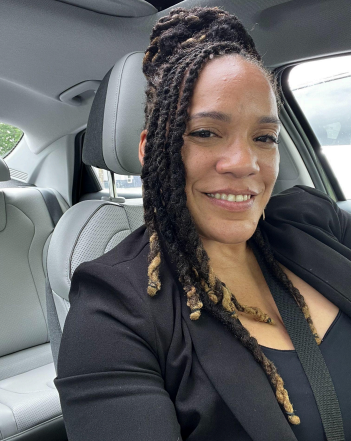
Ayisha Elliott is a mother, grandmother, and relational parenting guide who understands the beautiful complexity of raising Black children in today's world. As a mother of three and grandmother of five—currently raising three of her grandchildren—she brings both lived experience and 25 years of professional expertise in relationship-centered approaches to the everyday realities of parenting across generations. From navigating school systems and cultural identity to managing sibling dynamics and travel logistics with children, Ayisha has learned that the same principles that transform organizations can revolutionize family life. As the content producer of the podcast Black Girl From Eugene, award-winning columnist, and sought-after speaker, Ayisha creates authentic conversations about what it means to raise confident, grounded children while honoring their heritage and preparing them for the world as it is. Her unique perspective comes from successfully balancing entrepreneurship with hands-on parenting, traveling internationally with the children she's raising, and understanding that every parenting decision carries both personal and cultural weight. Through her writing and speaking, Ayisha offers practical wisdom, honest reflection, and relationship-building strategies that help Black families thrive—not just survive—in complex times.