
Moving Beyond Fear to Empowerment

By Ayisha Elliott
I want to start with acknowledging that Identity development involves many factors, adoption, foster care, multiracial identity, class, disability, and more. This piece and most of my pieces focus specifically on navigating race, recognizing there may be additional layers to your family's experience. It’s important to recognize the lens in which we navigate information.
As a parent raising Black or Brown children while you yourself are not Black or Brown, you're navigating something that requires more than love although love is essential. What also matters is understanding this truth: the USA was designed to ensure Black and Brown people live with fear that limits their potential. When you are Black or Brown, this reality is evident from day one. The difference lies in how we, as a community approach it.
Healthy Black communities understand that constant messages suggesting inferiority are not coming from within us, and they are not relevant to our story. We teach and live empowerment, not fear. We are not afraid of being Black. Being Black is not worrisome or scary. Which I’m sure seems like a “no-brainer”, however in reality, what is worrisome is how cultural practices of white supremacy reacts to and treats Black people. Healthy Black people do not center white people's fear.
This is the critical distinction you must grasp: Fear of the Black experience is taught through ignorance and isolation, really just knowing the Black community only through rumors, TV, music, and/or distant perspectives. If you've been conditioned to fear what your child is or may become, how do you raise them to be unafraid of themselves? The deep truth is you cannot teach your child to be unafraid of themselves if you haven't examined your own relationship with Blackness.
When you have a child developing an identity the world will work to demonize, your understanding of how Black people navigate and succeed in a discriminatory world directly shapes what and how you teach them.
Ways in which Fear shows up unconsciously could look like and is not limited to:
Choosing hairstyles that are "easier to manage" which turn out to be less "ethnic"
Skipping skincare steps to avoid attention, even though your child's skin needs shea butter
Asking your "talkative" toddler or "highly energetic" middle-schooler to quiet down, to be less noticeable, to fit standards designed to make them smaller
Black and Brown children are labeled "loud" or "overly energetic" instead of engaged and excited. Your job is to know the difference and protect your child's full expression, not police it. Policing expression that looks new to you can be a total shut down of what they are naturally expressing. Proceed with curiosity and learn who they are, without any constraint.
Your babysitter, your child's school, even your own parents may not realize they're damaging your child's self-esteem by treating what is normal as something needing correction. Fear can sometimes come in at this point as protection, be careful in the reason why.
The difficulty of this work is not a reason to shy away. We have all been socialized to believe people are better or worse based on skin color. You must locate where your internalized bias lies dormant, bring it into light, and deconstruct it.
Your child needs you to acknowledge Black excellence without framing it as "success despite discrimination" as if the benchmark is proving something to white supremacy. 2. Recognize Black struggle as the ability to rise above systemic harm, not as evidence of deficiency- this can be demonstrated in your narrative. 3. Teach them what is possible, not what is safe according to white comfort. 4.Discern truly safe spaces and people, not based on assimilation, but on who affirms your child's full humanity.
You cannot shield your child from a world that will judge them by their skin. That is painful reality. But you do not have to accept the limits that world imposes. What you must do is ensure you are not unconsciously reinforcing those limits.
Here are three ways to get started:
Examine what you absorbed What did you learn about Black people growing up? Where did you learn it? What narratives about Black hair, Black speech, Black expressiveness do you carry unquestioned?
Build authentic relationships in Black community If you're raising your child isolated from Black people and culture, you're setting them up for harm. This isn't about Tokenizing, it's about your child needing mirrors and your needing people who can see your blind spots. Find Black-centered spaces: bookstores, cultural events, parenting groups, churches. Show up consistently, not as a spectator, get involved in a way you and your child are joining a community, and let them shine, while you support.
Learn from Black parents Read books by Black authors on Black child development (not white authors writing about Black children). Understand how Black parents teach empowerment in the face of systemic harm. This isn’t about copy and paste. This is perspective. This is a check in on your lens, this is a temperature check, and an opportunity to grow.
Prepare your child to navigate harm without internalizing it. They will encounter people and systems that don't recognize their humanity. Your job is to make sure they know deeply, without question, that the problem is not them.
By age two, your child will notice race. By age four, they'll ask why their skin is different from yours. By age 6, they'll encounter their first racist comment. By age twelve, they'll be navigating how the world sees them versus who they know themselves to be. At every stage, they need you awake and honest.
This work is ongoing. It requires you to keep examining where you might unconsciously teach your child to shrink. But this is the work that love requires when raising a Black or Brown child in a world not designed for their thriving.
So ask yourself: What is one belief about Black people you absorbed without questioning?
Start there.
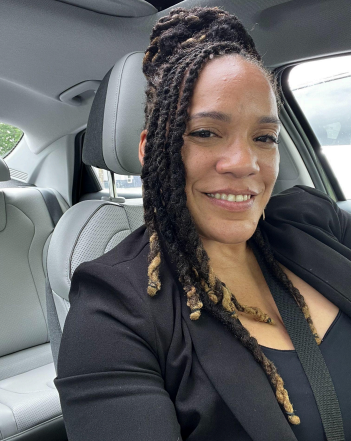
Ayisha Elliott is a mother, grandmother, and relational parenting guide who understands the beautiful complexity of raising Black children in today's world. As a mother of three and grandmother of five—currently raising three of her grandchildren—she brings both lived experience and 25 years of professional expertise in relationship-centered approaches to the everyday realities of parenting across generations. From navigating school systems and cultural identity to managing sibling dynamics and travel logistics with children, Ayisha has learned that the same principles that transform organizations can revolutionize family life. As the content producer of the podcast Black Girl From Eugene, award-winning columnist, and sought-after speaker, Ayisha creates authentic conversations about what it means to raise confident, grounded children while honoring their heritage and preparing them for the world as it is. Her unique perspective comes from successfully balancing entrepreneurship with hands-on parenting, traveling internationally with the children she's raising, and understanding that every parenting decision carries both personal and cultural weight. Through her writing and speaking, Ayisha offers practical wisdom, honest reflection, and relationship-building strategies that help Black families thrive—not just survive—in complex times.Make it stand out
Whatever it is, the way you tell your story online can make all the difference.