
Sacred Tresses: Raising a Black Child Means Caring for Their Crown
By Ayisha Elliott
Summer is here, and with it comes a question that lands in my inbox, in community groups, and in quiet, honest conversations more than almost any other: What do I do with my child's hair?
If you are not Black and you are raising a Black child, this question is not small nor is it cosmetic. It is cultural, relational, and deeply tied to how your child will move through the world and understand themselves. I want to help you get it right not because I'm judging where you are, but because I know where this can take you both.
I want to be clear about who I am before I offer guidance. I am not a hairstylist. I am a Black woman with a formidable amount of hair. This hair I have twisted, cornrowed, and braided myself, extensions included. I have maintained a full set of locs, worn a voluminous afro, and had relaxed hair. I have two daughters, 8 nieces, 1 grand daughter and at least a few cousins, whom I have been an active, trusted presence in the care of all of their hair. I offer this not to impress but to establish: this isn't theory. This is lived knowledge.
In Black culture, hair is not simply an aesthetic choice. It is a ritual, a legacy, and a living symbol of identity. The condition of a Black child's hair communicates something to the world ,and to the child, about whether they are seen, loved, and cared for.
I have heard too many stories of White families with Black children being approached sometimes harshly, sometimes directly with the comment: do your child's hair. I understand the defensiveness that follows. I understand the embarrassment. I also understand why those reactions happen and what they're pointing to.
This guide is not about shame. It is about equipping you with what you need, because the goal isn't perfect hair, it's a child who grows up knowing their crown is worthy of attention, care, and pride.
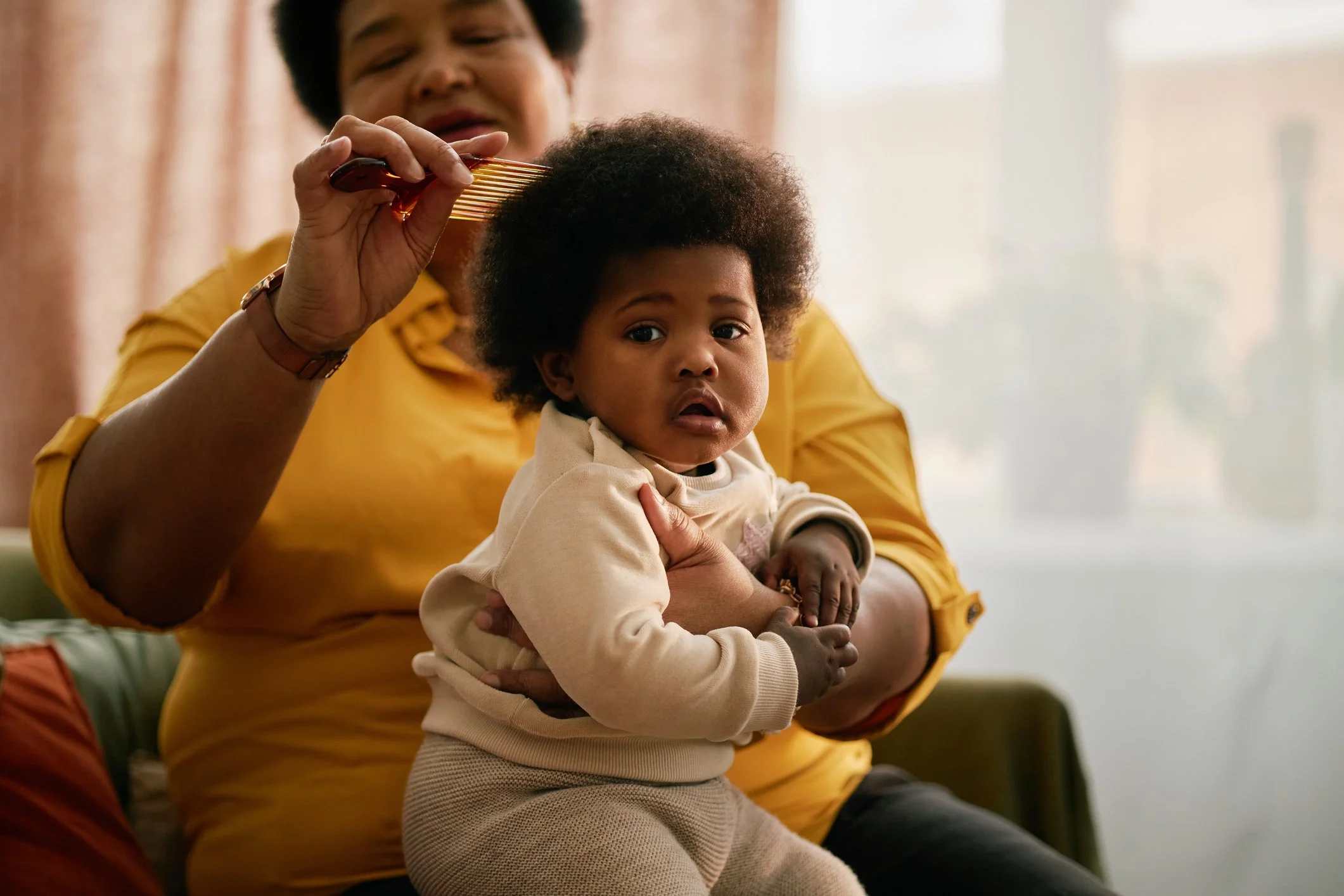
One of the most important things I can tell you has nothing to do with products or technique. It has to do with habit.Introduce hair manipulation early. A daily or near-daily routine even just a gentle brush, a little moisture, a few minutes of intentional contact teaches your child, from infancy, that having their hair touched is normal, expected and safe. This is what I mean when I say training, and I know that word can feel strange to parents who don't come from a hair-ritual tradition. Stick with me here.
A toddler who has never had a consistent hair routine will resist it, they all do initially, and rightfully so,it feels foreign to them. A child who has grown up with it will sit still, will know what to expect, and will eventually take pride in it themselves. You are not just detangling hair. You are building trust, routine, and the earliest foundations of self-care.
Start gentle manipulation around six months, soft brushing, directing their hair. Whenever there is enough hair to work with you can start with loose little braids in small sections. You are not going for a perfect style. You are going for familiarity.
Washing daily is not necessary for most Black hair and in fact, over-washing can strip essential moisture. That said, life with babies means food, milk, and mystery substances end up everywhere, so use your judgment and wash as needed. Sometimes just a warm water rinse will work in that instance. What matters more than frequency is that washing is part of a predictable routine. When it does happen, make it gentle and intentional.
On moisture: Before you style, always wet the hair. A simple spray bottle with warm water and a leave-in conditioner mixed together is ideal for young children — it avoids unnecessary chemicals while providing the slip needed to detangle. Get the hair genuinely wet. Avoid gels, use natural oils instead.
On detangling: Always brush from the bottom up. Start at the ends and work your way toward the roots. Take your time. Do not rush. Do not pull.
On tension: This cannot be said strongly enough never pull tight. Not for a ponytail, not for braids, not for any style. High tension causes real damage to your child's scalp and hair follicles and hairline, and it is never worth it. Messy buns, cared for “naturals” (afros), loose braids, and soft styles are completely appropriate, and beautiful, especially while the hair is still establishing itself. When you are beginning to practice braiding, try working without a rubber band to anchor the sections. Focus on learning the form and the parting pattern first. Clean, purposeful, and gentle is always the goal. You can anchor later, but still avoid pulling.
For tutorials on braiding, parting, and adding adornments like beads, YouTube is genuinely one of the best resources available. There is an entire community of people who have documented this knowledge generously, I’d definitely use it.
Yes and no. Curl pattern matters for styling decisions and for understanding how much tension or manipulation a style can handle. Tighter coils that tangle easily will need more moisture and more careful detangling; the spray bottle method above is especially important here.
What matters even more than curl pattern is hair porosity — how well your child's hair absorbs and retains moisture. If you can access a specialist in Black hair, ask about this. The difference between a light oil and a heavy oil, and knowing which one suits your child's hair, is more meaningful than most people realize. Side note: Moisture is equally important for short cuts (fades) as well.
I hear this often from parents who are not Black: that they are letting their child's hair grow "free form." I want to sit with this for a moment, because it deserves a careful and honest response. A free form choice — intentionally cultivating natural, unmanipulated growth — is a valid and beautiful hair journey. I know this personally. My afro is healthy, voluminous, and deeply cared for. The key word is cared for.
Free form is not the same as untouched. It requires its own moisture routine, its own attention, its own relationship with the hair. And more importantly: it is a choice that should belong to the person whose hair it is. A young child cannot make an informed choice about their hair identity. What they need, in the meantime, is to have their hair tended to with consistency and love so that when they are old enough to make that choice themselves, they have a foundation of care rather than a history of neglect.
If your child resists having their hair touched, that is information about the routine, not a sign to abandon it. All kiddos cry being held in place. It’s not always about them getting their hair brushed more than it is having to sit still to do it. Meet them with patience, shorter sessions, and gentleness. Resistance is normal. It does not mean stop.
Finding a Black hairstylist in Eugene, or the PNW more broadly, is genuinely difficult and I want to acknowledge that without letting it become an excuse. I know personally that there are non-Black stylists in Eugene who are highly qualified and experienced with Black hair textures. A knowledgeable, attentive stylist who respects the hair and culture tied to it is far better than the nearest available appointment with someone who does not.
For the deeper cultural connection that Black hair care carries, the community, the conversation, the connection, a Black stylist, if you can access one, offers something irreplaceable. A Black therapist, Black teachers, Black mentors: these relationships matter to your child's sense of belonging and self. Do what you can with what you have, and keep looking for what works best.
Everything I have said about consistency and intentionality in hair care applies directly to skin care. This is a daily practice, and it is not optional.
Lotion and I mean real, substantive lotion after every bath, after every swim, morning and evening. The thicker the formula, the better. Look for shea butter in the first three ingredients. It is deeply nourishing for melanated skin and has been a cornerstone of Black skin care for generations.
Yes, sunscreen. Every summer, every day of real sun exposure no matter how deeply melanated your child is. Darker skin tones can and do sustain UV damage. This is not up for debate.
In winter, the routine intensifies rather than relaxes. Cold air and indoor heat are relentless in stripping moisture from skin. Keep the lotion routine consistent year-round.
The "moisturized" look — that glow, that richness, that visible vitality is more than aesthetics. It is a cultural signal that says: this child is loved and tended to. It is a grounding piece of Black identity and self-regard that your child will absorb and carry forward. Build that into the routine now, while they are small, and it becomes part of who they are.
You may not get this perfect immediately. That is fine. What matters is that you are taking it seriously, that you are learning, and that your child can feel the intention behind your hands when you touch their hair and care for their skin.
Their crown is sacred. Treat it that way and let that be something they know without ever having to be told.
Have questions, want product recommendations, or looking for Eugene-area resources? Reach out — I'm happy to point you in the right direction.
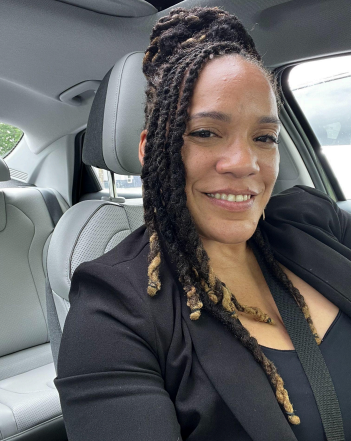
Ayisha Elliott is a mother, grandmother, and relational parenting guide who understands the beautiful complexity of raising Black children in today's world. As a mother of three and grandmother of five—currently raising three of her grandchildren—she brings both lived experience and 25 years of professional expertise in relationship-centered approaches to the everyday realities of parenting across generations. From navigating school systems and cultural identity to managing sibling dynamics and travel logistics with children, Ayisha has learned that the same principles that transform organizations can revolutionize family life. As the content producer of the podcast Black Girl From Eugene, award-winning columnist, and sought-after speaker, Ayisha creates authentic conversations about what it means to raise confident, grounded children while honoring their heritage and preparing them for the world as it is. Her unique perspective comes from successfully balancing entrepreneurship with hands-on parenting, traveling internationally with the children she's raising, and understanding that every parenting decision carries both personal and cultural weight. Through her writing and speaking, Ayisha offers practical wisdom, honest reflection, and relationship-building strategies that help Black families thrive—not just survive—in complex times.Make it stand out
Whatever it is, the way you tell your story online can make all the difference.Make it stand out
Whatever it is, the way you tell your story online can make all the difference.