

Health & Development
Supporting Resilience Every Day
Our routines, relationships with other people, and perspectives on life all influence our wellbeing. When we share these parts of our lives with kids,…

Health & Development

We’ve all experienced the challenges of supporting an upset child who was tired or not well-rested. And we have also been in a position as parents when we tried to do more than was reasonable on less sleep than we really needed, too.
How long and how well we sleep has a big impact on the overall well-being of both children and adults alike. We need adequate sleep to:
Restore our energy and heal our bodies
Grow and develop optimally
Have good brain functioning that includes attention, focus, learning, decision-making and memory
Regulate emotions and behavior
How much sleep is enough? According to the Centers for Disease Control and Prevention, how much sleep you need depends on how old you are, and they provide guidance on the daily recommended hours of sleep for children and adults of various ages. This can range to as much as 17 hours a day for newborns, all the way down to just seven hours a day for some particularly light-sleeping adults.
Getting sleep right is important: children who are chronically tired are less able to regulate their emotions and behaviors and have difficulty paying attention. It can impact their physical, emotional and mental health. If you are concerned about your child’s sleep, talk to your healthcare provider. They will be able to look at health problems that may be getting in the way of nighttime rest requirements or support an individualized approach to address the needs of the family.
Since sleep influences our long-term health and wellness, having family bedtime routines can support quality sleep habits for everyone and improve cooperation in children.
Some steps we can take to develop these habits for our children:
Encourage children to develop awareness of their body’s need for rest and calm.
Set a consistent time for bedtime that takes the age of the child (see the above CDC link) into consideration. Start to reduce lights, noise, screen use, and activity in the home well before that time.
Use a predictable schedule for washing up, brushing teeth, using the bathroom or diapering, and putting on night clothes.
When adults provide balanced schedules and boundaries, children can practice self-regulation and change from active to restful.
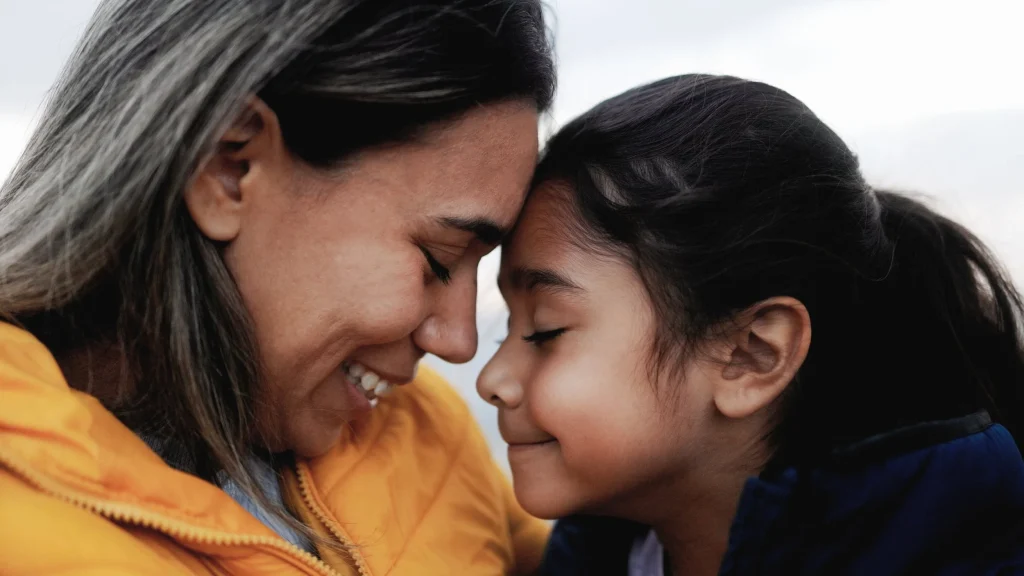
Children will seek connection for safety and comfort, so make time for cuddles, sharing stories, and reading books to meet their emotional needs. Read Brightly has a list of books by Jennifer Ridgeway that can help in Sleepytime Stories: Books to Help Children Build a Bedtime Routine.
Create a peaceful sleep environment for children using white noise or soft music, calming scents such as lavender or chamomile, cool temperatures, and darkness (add a nightlight, if needed).
Getting up at the same time each morning and having balanced daily routines that include appropriate activity and rest periods can help improve naps and nighttime sleep. Observe signs of maturation in the child as they outgrow naps and consolidate sleep.
Sometimes families will put lots of thought and care into a bedtime routine and find that their child just doesn’t want to play along. That’s why I recommend, as you’re planning a bedtime routine, try allowing your child to have some choice in their routine, such as what they wear or what special comfort items they bring to bed. This helps reduce power struggles for children, who naturally seek autonomy and independence even from young ages.
Some children can become stressed about being separated from their parents during the night, so be sure they receive care and attention in positive ways to encourage relaxation and sleep. Adults can join their children in being quiet and still as they transition to sleep or rest.
Sweet dreams families!

Aoife Rose Magee, PhD, earned a doctoral degree in Special Education from the University of Oregon Early Intervention Program. Her personal and professional interests have been largely focused on the social-emotional development of young children and how positive parenting and teaching practices may contribute to healthy development, promote resiliency, and mediate risk factors. Aoife is professional development specialist for students and practitioners in the areas of Early Childhood Education, Early Intervention/Early Childhood Special Education and Parenting Education. Aoife serves as a Master Trainer for the Oregon Registry and frequently provides community based and private workshops for early childhood educators, parenting educators, and other professionals. For more than thirty years, she worked directly with families as a parenting educator, and she is a former Oregon Parenting Education Collaborative Hub Coordinator for the Parenting Success Network. She currently teaches as a full-time faculty in the Early Childhood Education Program at Lane Community College. She is also the mother of a fantastic young adult son and enjoys nature and creative pursuits in her spare time.
Health & Development
Our routines, relationships with other people, and perspectives on life all influence our wellbeing. When we share these parts of our lives with kids,…

Health & Development
The world is historically heavy right now. As adults, we struggle to make sense of events happening, and it is extremely challenging and heartbreaking…
Receive our monthly newsletter for activities, local events, and fun learning ideas. Available in English or Spanish.
Sign Up