
Your Child Is Not a Zoo Animal
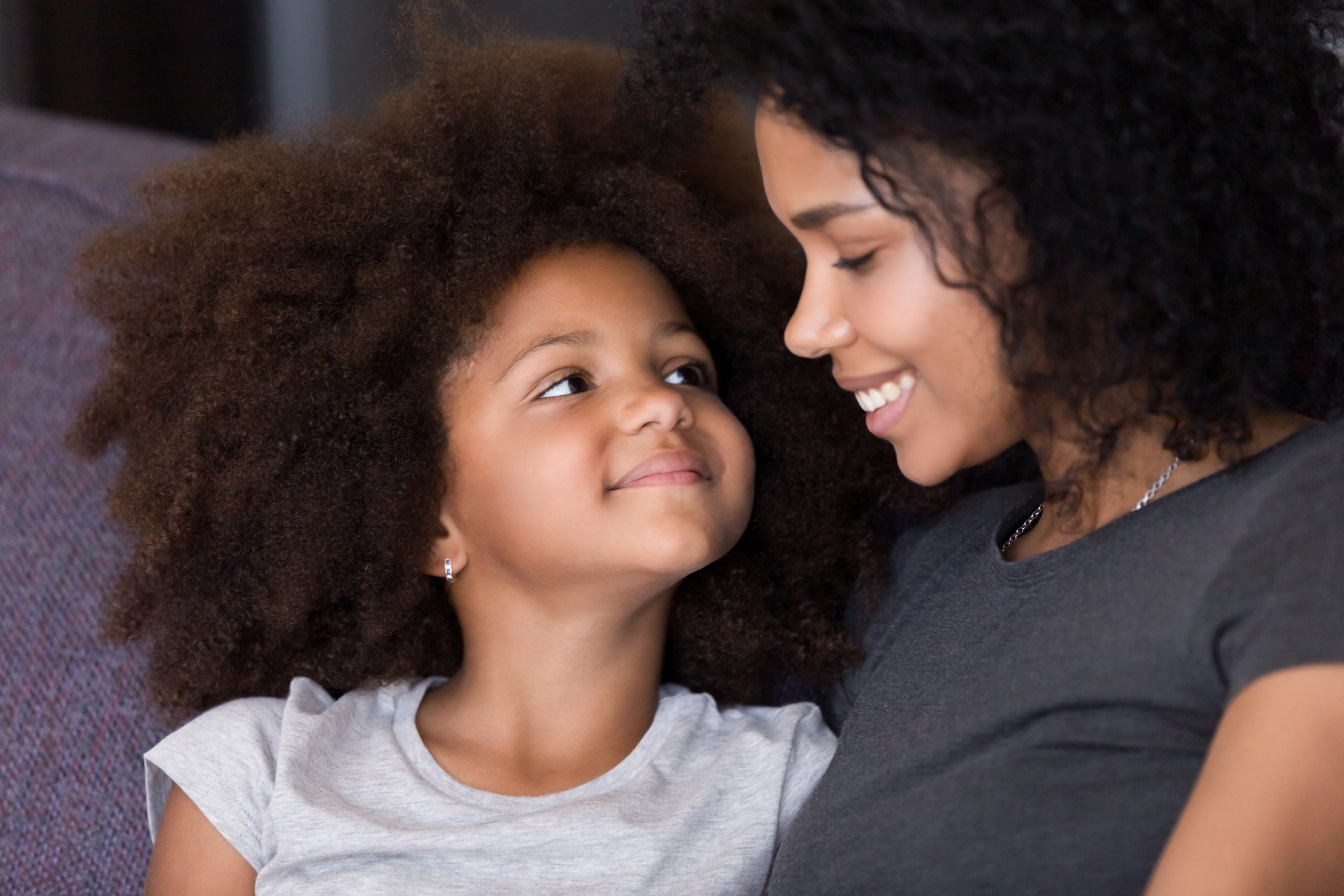
Directly, no one should ever touch your child's hair without consent. While I'm speaking specifically about biracial children, particularly those with curly to kinky hair, the principle extends to every child. Bodily autonomy is not conditional on hair texture, race, or age. No child exists to satisfy the curiosity of another person, no matter how well-intentioned that person believes themselves to be.
Yet it happens constantly. A stranger reaches out, a relative leans in, and a well-meaning teacher, distant relative touches first and asks never. These moments are often among the first experiences of racism a biracial or Black child endures and they happen at the hands of the people who love them most. That is not a small thing, it's a source of true identity conflict and one of the most dangerous harm is the kind dressed in warmth.
To understand why this matters so deeply, you need to understand where it comes from because this is not merely about manners. It is about centuries of dehumanization made physical.
There was a time when Black people were placed in what were called "human zoos" exhibited in Europe and the United States throughout the 19th and early 20th centuries as spectacles for white audiences. Their bodies, skin, and hair were placed on display as objects of fascination and otherness. Saartjie Baartman, known as the "Hottentot Venus," was one of the most documented victims of this practice; paraded across Europe and studied after her death. She was not an anomaly. She was a part of a deeply disturbing pattern.
That kind of trauma does not simply end when the exhibition closes. It is carried forward in family stories, in cultural memory, in the body itself. Research in epigenetics increasingly supports what Black communities have long understood: that trauma can be inherited, encoded into the nervous system across generations. Your child does not need to have read a history book to carry this weight. They already may be coded with this trauma.
When you allow someone to reach out and touch your child's hair uninvited or you laugh it off, or offer them up as a novel experience, you are re-enacting something much older than you realize. Your child feels it, even if they cannot name it.
People outside of Black culture are often puzzled by the significance placed on a child's appearance particularly their hair and skin condition. Some parents, especially those who did not grow up in Black households, interpret this emphasis as vanity, or as an outdated preoccupation with looks they'd rather not pass on. I want to dismantle that assumption carefully, because the misunderstanding causes real harm.
"Presenting well" was once a phrase used to appraise enslaved Black people before they were sold. It was a term of commerce, a measure of a human being's market value. After emancipation, Black communities reclaimed it. They transformed it into something defiant: a declaration that we take care of our own. Post-slavery Black families began to care for themselves and their children in ways that reflected their collective pride, strength, and resilience. Presentation became a reclamation, a way of saying: we know who we were before all of this, and we remember.
To "present well" became about more than looks. It became a signal of love, of belonging, of protection. When members of the Black community see a Black or biracial child who appears unkempt, particularly their hair or skin, what is activated is not judgment of the child, but grief. It reads as a severing from that thread of care and history. It is a pain that goes deeper than aesthetics.
This is not simple, It is absolutely layered, and living history.
Black hair, in all of its forms, tightly coiled, kinky, afro styled, deeply curly or dreaded, was weaponized by white colonial culture as a primary symbol of inferiority. The more "Black" your hair, the more ridicule you could expect. It was not accidental, it was codified systematically. Hair became a mechanism of racial hierarchy, used to shame, to exclude, and to rank human beings.
The Natural Hair Act, formal workplace protections, and the ongoing CROWN Act movement, legislation still not passed federally as of this writing, though adopted in many states (not all) exist precisely because Black people continue to face discrimination for wearing their hair in its natural state. Locs, afros, braids, and twists have been banned in schools and workplaces within living memory. Children have been sent home. Adults have lost jobs. For wearing their hair. Pause on that for a moment.
Wearing natural hair in America is still, for many Black people, an act that requires courage. Not because there is anything wrong with natural hair, there is not; because this country has spent centuries telling Black people otherwise, to wear hair naturally is a sometimes difficult decision of defiance. The decision to wear or not wear one's hair naturally is deeply personal, often political, and always significant. It is not a neutral aesthetic choice the way it might be for someone outside this history.
That beauty demands respect. Not tolerance but open protection and respect.
If you are raising a Black or biracial child and you do not share their racial heritage, you have a specific responsibility. Your child's hair is not decorative nor is it optional. It is a cultural tie, one they will one day need to understand and claim for themselves. It is one that right now communicates to the broader Black community whether or not they are in safe hands.
This is not about perfection but it is about intentionality. When you take time, care, and thought with your child's hair, you are telling them: you are worth this effort. Your identity is worth learning. Your culture is something I honor, and hold safely.
The practical guidance is this: find a Black hair stylist who can advise you and build that relationship. For children under three, YouTube is a genuinely rich resource, there are entire communities of parents and stylists documenting this care with love. Once your child is in school, be prepared, because their hair will need regular attention and style changes, and they will begin to notice how it is treated by you, and by the world.
When you engage fully in this practice often what happens is, the time becomes warm memories. Hair days become bonding rituals. The creativity of Black hair, the braids, the protective styles, the oils and butters and the folklore of it all becomes something you share with your child, not just a task you perform for them.
Your child's hair is an extension of their body. It is not a texture sample. It is not a conversation starter. It is not an invitation.
Curiosity is not an entitlement. "I've just never felt hair like this before" is not a reason. Kindness of intention does not override violation of body or that unforgettable impact. A child who is too young or too socialized to say "no" to an adult is not a child who has given consent. They are a child who has been made to comply.
When someone reaches toward your child's head, your job is to step in before their hand arrives. Not after, don’t add a laugh and an apology on your child's behalf. Before.
Your child is watching you. They are learning, in real time, whether their body belongs to them or to whoever finds it interesting.
They are not here for display. They are not a curiosity. They are not a zoo animal.
They are a child, and their crown is their own.
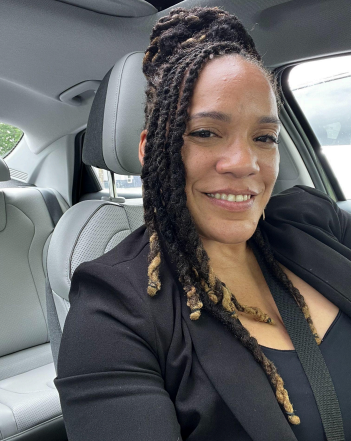
Ayisha Elliott is a mother, grandmother, and relational parenting guide who understands the beautiful complexity of raising Black children in today's world. As a mother of three and grandmother of five—currently raising three of her grandchildren—she brings both lived experience and 25 years of professional expertise in relationship-centered approaches to the everyday realities of parenting across generations. From navigating school systems and cultural identity to managing sibling dynamics and travel logistics with children, Ayisha has learned that the same principles that transform organizations can revolutionize family life. As the content producer of the podcast Black Girl From Eugene, award-winning columnist, and sought-after speaker, Ayisha creates authentic conversations about what it means to raise confident, grounded children while honoring their heritage and preparing them for the world as it is. Her unique perspective comes from successfully balancing entrepreneurship with hands-on parenting, traveling internationally with the children she's raising, and understanding that every parenting decision carries both personal and cultural weight. Through her writing and speaking, Ayisha offers practical wisdom, honest reflection, and relationship-building strategies that help Black families thrive—not just survive—in complex times.