
Teaching Our Children a Different Story
By Ayisha Elliott
Welcome to 2026. I know it's looking very complex at the moment, and I know you're scared—we all are. I generally write these pieces for non-Black parents raising Black children; however, I think this message is for all parents of young children. This year carries a particular type of peril. Our communities haven't faced this specific flavor of danger within the United States affecting the masses of the population since the genocide of Indigenous peoples when the invasion began 250 years ago.
That being said, our communities have a hidden code of norms that are not safe for everyone. They are norms that subtly tell some children they must wait their turn to be heard or seen, with little encouragement to dream as big as they can. The words may say one thing, but opportunity, access, and resources say something very different.
We are in a time when nothing can be taken for granted and everything good, fair, and just must be protected. We have to reach for the most ideal version of equity. This is the time to take all doubt of possibility out of your mind and insist on it, unequivocally.
This moment is slightly different from the history of marches, judicial decisions, and constitutional amendments, because this is not just about the "exceptions to the rule", the others: people of the global majority, women, disabled folks, or the queer community. This includes people who were thought to be protected. White, educated men who are not billionaires do not get a pass. They cannot pass go. Their $200 stolen. The lie is exposed.
It is crucial to examine the narratives we have practiced and passed down. Does your narrative, your songs, your books, your baby classes actively EXPRESS inclusion? Does the park where you take the dog reflect a diverse population? Does your yoga class acknowledge and honor the origins of the practice? Are we assuming these things are by choice, or have we recognized a design of exclusion? If the answer is no, do you know why?
When we are playing with and teaching our youngest people, they are learning by example faster than AI is evolving. Language of comparison, of class, of either/or thinking is problematic in a community of inclusion. Of course, as parents, it starts with us. We have to practice this in ways that don't insist on perfectionism, but in ways that allow for learning and practiced humility. Here are a few examples you can try:
Instead of "We don't do that in our family," try "Some families do it this way, some do it that way, and both are beautiful."
Instead of "They're different from us," try "They do things differently than we do, what can we learn from them?, what can we share in learning?"
Instead of "You're so lucky to have what you have," try "We're grateful for what we have, and everyone deserves to have their needs met."
Instead of "Those people over there," try using names, or "our neighbors," or "people in our community."
Instead of "That's weird or odd," try "That's new to me, tell me more about it."
I believe compassion is easy for little ones. Adults tend to operate from some sort of fear. There is plenty to be afraid of, especially now, but fear will never develop into functional or positive clarity.
Children respond to joy in ways that are expansive. Children have a magic they are born with. Their minds are full of stories based only in imagination and possibility. If our stories about our neighbors, about our place in society, remove man-made barriers like race and fill their hearts with diverse language and knowledge of global humanity, then "different" only means options of possibility. Having a healthy sense of cultural appreciation, with a healthy lack of ownership, just shared joy is the world of a child's connection.
Reject the narrative of division and insist, everywhere you are, that division is not tolerated, it is not celebrated and most importantly not ignored as a norm in this new world and your babies will follow!
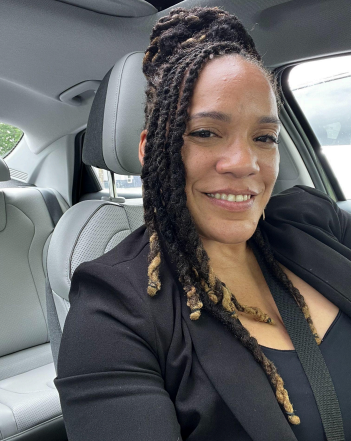
Ayisha Elliott is a mother, grandmother, and relational parenting guide who understands the beautiful complexity of raising Black children in today's world. As a mother of three and grandmother of five—currently raising three of her grandchildren—she brings both lived experience and 25 years of professional expertise in relationship-centered approaches to the everyday realities of parenting across generations. From navigating school systems and cultural identity to managing sibling dynamics and travel logistics with children, Ayisha has learned that the same principles that transform organizations can revolutionize family life. As the content producer of the podcast Black Girl From Eugene, award-winning columnist, and sought-after speaker, Ayisha creates authentic conversations about what it means to raise confident, grounded children while honoring their heritage and preparing them for the world as it is. Her unique perspective comes from successfully balancing entrepreneurship with hands-on parenting, traveling internationally with the children she's raising, and understanding that every parenting decision carries both personal and cultural weight. Through her writing and speaking, Ayisha offers practical wisdom, honest reflection, and relationship-building strategies that help Black families thrive—not just survive—in complex times.