


Parenting Tips
Understanding your birth team: Doulas vs. midwives
Preparing for the birth of your baby is an exciting journey, filled with important decisions. Among these, choosing the right kind of support for…

Parenting Tips
What does Black History Month mean to you?
If you said “the shortest month,” we need to talk. If you said, “a celebration to show us about Black people,” we need to talk. Because both of those answers accept lies as truth. In 2026, as we watch the systematic dismantling of truth in education, book bans, attacks on teaching Black history, the weaponization of the word “woke” against truth-telling and collective awareness, it matters more than ever that we get this right.
The month is, of course, a celebration, but it was first a week of encouragement to celebrate Black achievement in a time when Black achievement was not widely accepted. It’s crucial that we know the truth of this month with accuracy, not with watered-down half-truths born from the unfortunate narrative that Black history is not American history.
The story begins in Chicago during the summer of 1915. Carter G. Woodson, an alumnus of the University of Chicago, traveled from Washington, D.C. to participate in a national celebration of the fiftieth anniversary of emancipation. Thousands of African Americans traveled from across the country to see exhibits highlighting the progress their people had made since the destruction of slavery. Awarded a doctorate from Harvard three years earlier, Woodson joined with a Black history display. Despite being held at the Coliseum, an overflow crowd of six to twelve thousand waited outside for their turn to view the exhibits.
Recognizing having earned his PhD from Harvard, Woodson understood what was at stake: a community’s relationship to its own excellence. Inspired by the celebration, he decided to form an organization to promote the scientific study of Black life and history. On September 9th, Woodson met at the Wabash YMCA with A. L. Jackson and three others and formed the Association for the Study of Negro Life and History (ASNLH).
He established The Journal of Negro History in 1916, hoping others would popularize the findings. As early as 1920, Woodson urged Black civic organizations to promote the achievements researchers were uncovering. He urged his Omega Psi Phi fraternity brothers to take up the work. In 1924, they created Negro History and Literature Week, renamed Negro Achievement Week. But Woodson desired greater impact. As he told Hampton Institute students, “We are going back to that beautiful history and it is going to inspire us to greater achievements.”
Black History week was for the growth and encouragement of a community to resist settling into mediocrity. It was internal cultural work, Black people creating the conditions for our own remembering, our own inspiration, our own refusal to accept less than our full humanity. In 1925, Woodson decided the Association had to shoulder the responsibility of both creating and popularizing knowledge about the Black past. He sent out a press release announcing Negro History Week in February 1926.
Woodson chose February for reasons of tradition and strategy. He selected it to encompass the birthdays of Abraham Lincoln and Frederick Douglass, the 12th and the 14th respectively. Since Lincoln’s assassination in 1865, the Black community had been celebrating the fallen President’s birthday. The narrative that Black people were given the shortest month of the year due to disrespect is simply untrue. This myth diminishes the intentional, strategic brilliance of Woodson’s choice. It replaces Black agency with Black victimhood. It erases the fact that Black people chose February, claimed it, built something powerful within it. Woodson didn’t passively accept what he was given, he strategically chose. This distinction between passive receipt and active creation is a critical difference in narrative of Black identity in the United States. I will add that it was 50 years later that this week was granted the entire month of February by President Ford.
In 2026, when accurate Black history is being banned from classrooms, when DEI initiatives are being rolled back, when the structures that allowed truth-telling are being systematically dismantled, knowing the real story of Black History Month is an act of resistance. It’s proof that we have always had to create the conditions for our own remembering. It’s proof that erasure has always been the project, and reclamation has always been our response.
When we accept watered-down stories like February was an insult rather than a strategic choice, that this month is about what was given to us rather than what we created for ourselves, as if we accept a diminished version of ourselves. That would indicate that we settled into the very mediocrity Woodson fought against.
Black History Month was not designed for white learning. It was internal cultural work that others are invited to witness but not center themselves in. It was about a community saying: we will not let our children grow up believing we have no history of brilliance, no tradition of excellence, no legacy worth celebrating. We will research it, document it, teach it, and celebrate it ourselves. As parents who are not Black, this is something to protect, to champion, to insist on.
With this celebration, make sure it is a celebration true to its nature, its story, its legacy. Share that Carter G. Woodson didn’t wait for permission. Share that Black communities organized themselves to reclaim and celebrate their own history when it was being systematically erased. Share that February was claimed with intention, not assigned as an afterthought. Share that this month was created to inspire us to resist mediocrity and reach for the pursuit of excellence is our birthright. It is a testament to the refusal to be forgotten, the insistence on being known truthfully, and the understanding that a people who know their history refuse to settle for anything less than full potential.
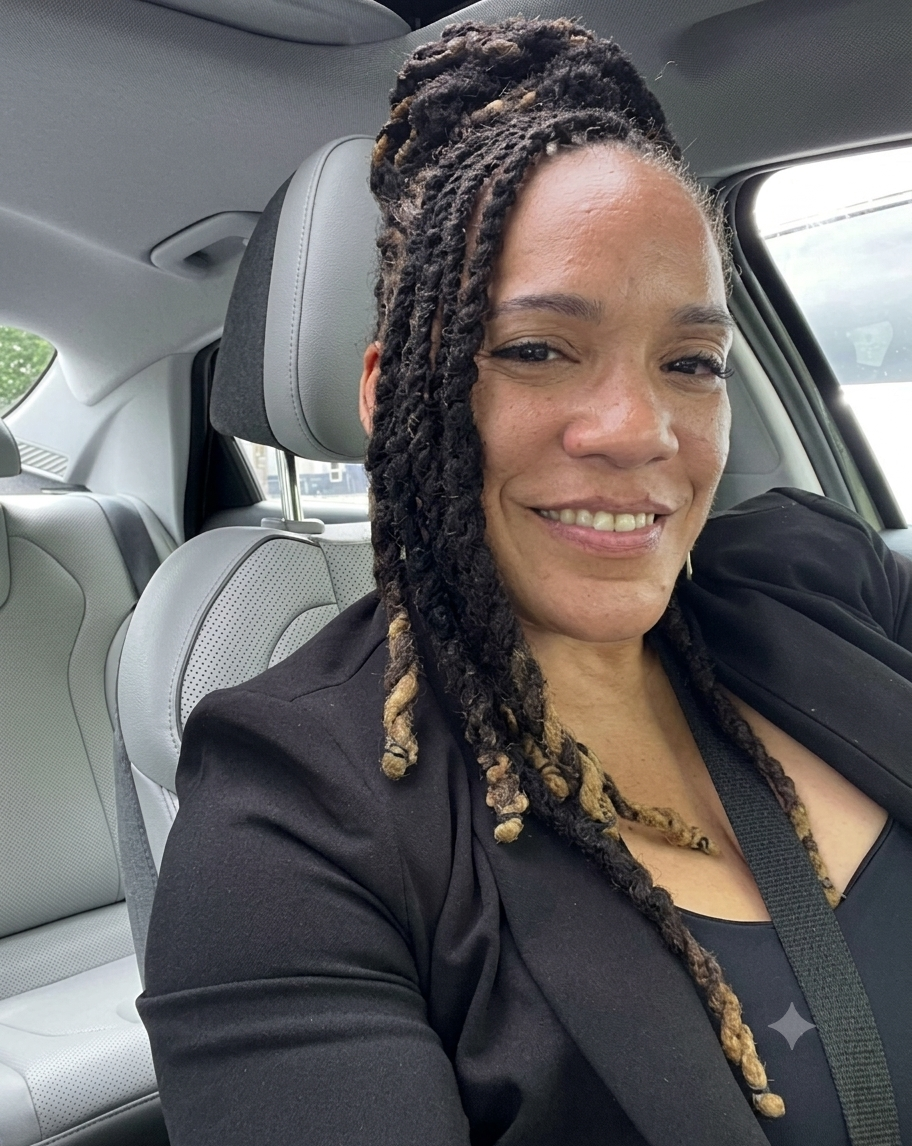
Ayisha Elliott is a mother, grandmother, and relational parenting guide who understands the beautiful complexity of raising Black children in today’s world. As a mother of three and grandmother of five—currently raising three of her grandchildren—she brings both lived experience and 25 years of professional expertise in relationship-centered approaches to the everyday realities of parenting across generations. From navigating school systems and cultural identity to managing sibling dynamics and travel logistics with children, Ayisha has learned that the same principles that transform organizations can revolutionize family life. As the content producer of the podcast Black Girl From Eugene, award-winning columnist, and sought-after speaker, Ayisha creates authentic conversations about what it means to raise confident, grounded children while honoring their heritage and preparing them for the world as it is. Her unique perspective comes from successfully balancing entrepreneurship with hands-on parenting, traveling internationally with the children she’s raising, and understanding that every parenting decision carries both personal and cultural weight. Through her writing and speaking, Ayisha offers practical wisdom, honest reflection, and relationship-building strategies that help Black families thrive—not just survive—in complex times.
Parenting Tips
Preparing for the birth of your baby is an exciting journey, filled with important decisions. Among these, choosing the right kind of support for…

Parenting Tips
After spending literal months preparing for pregnancy and childbirth, many families find themselves woefully underprepared once they bring their newborn home. The fourth trimester…
Receive our monthly newsletter for activities, local events, and fun learning ideas. Available in English or Spanish.
Sign Up